Website Preview
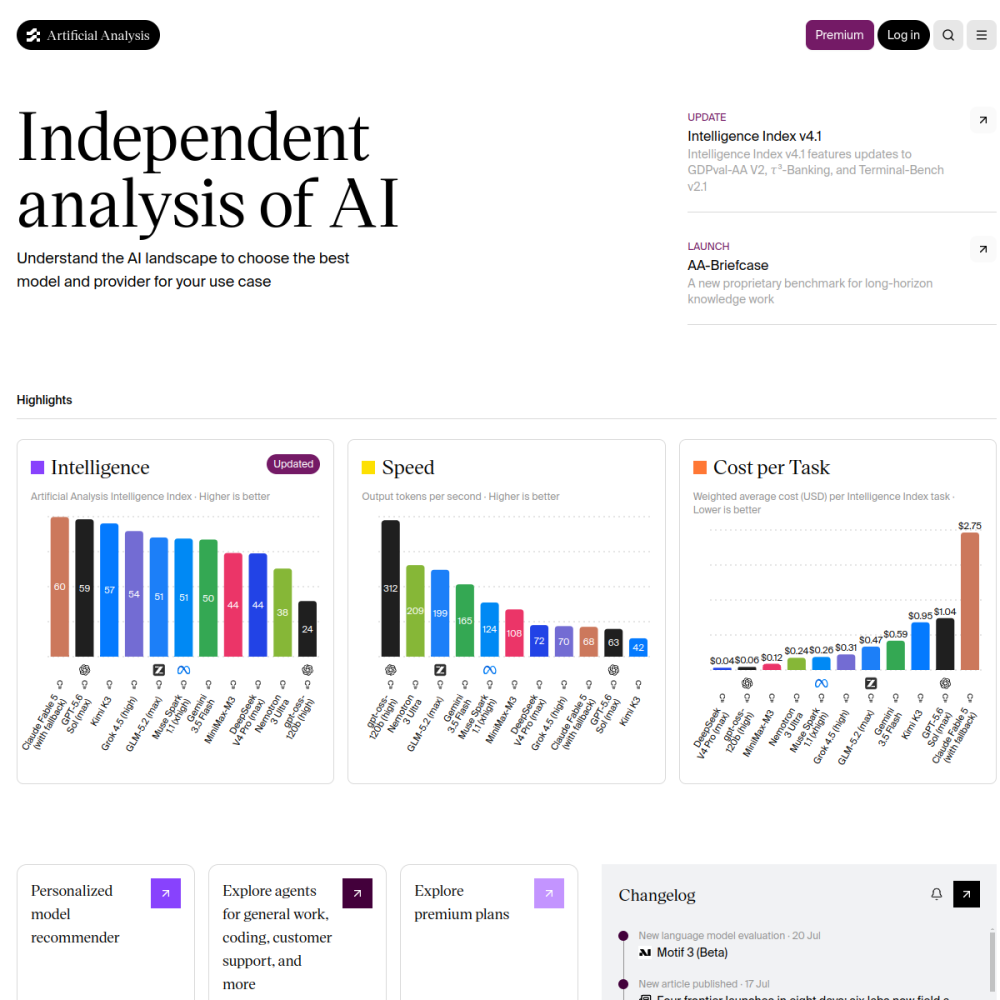
Tool Guide
Artificial Analysis serves as a resource for independent AI model speed and quality evaluations. It provides benchmark data designed to help users understand performance differences across various large language models without relying solely on vendor claims.
The platform focuses on transparent metrics that matter for practical deployment. By aggregating evaluation data, it offers a clearer picture of how different models perform under specific testing conditions.
Artificial Analysis is a benchmarking platform dedicated to assessing AI models objectively. It operates independently to provide data regarding model capabilities without external influence.
The site publishes evaluations covering both speed and quality aspects. This dual focus ensures users see not just accuracy, but also efficiency metrics relevant to real-world usage.
Unlike proprietary reports, this resource aims to standardize how performance is measured across the industry.
The primary feature is the publication of independent evaluation results. These results highlight specific strengths and weaknesses of different models available in the market.
Users can access data related to LLM performance through the website interface. The platform structures information to facilitate easy comparison between competing technologies.
Transparency remains a core component of the feature set. Data is presented to allow for informed decision-making based on empirical evidence rather than marketing claims.
Developers seeking reliable performance data will find this tool particularly useful. It helps them select models that fit specific latency and accuracy requirements for their applications.
Researchers and analysts also benefit from the independent nature of the evaluations. They can reference the data when studying trends in AI model development over time.
Business leaders evaluating AI vendors can use these benchmarks to verify claims made during sales processes.
One common use case is comparing multiple models before integration into a product. Teams can review speed and quality scores to prioritize options that meet their technical constraints.
Another scenario involves monitoring model updates over time. Users can track whether new versions offer genuine improvements based on published benchmarks.
It also serves as a reference point for technical discussions regarding model efficiency and output quality within organizations.
To begin, visit the official website at artificialanalysis.ai to access the database. Browse the available benchmark categories to find relevant data for your specific needs.
Review the methodology sections if available to understand how tests are conducted. This ensures you interpret the results correctly within your context.
Use the data to inform your selection process. Cross-reference findings with your own internal testing for the best results.
Yes, it positions itself as an independent resource for model evaluations.
The platform focuses on large language models and their speed and quality metrics.
The benchmarks provide independent data points to support informed commercial and technical choices.