Kimi 探索版
Vendor: Moonshot
Moonshot's deep research and multi-step planning search engine
Official Preview
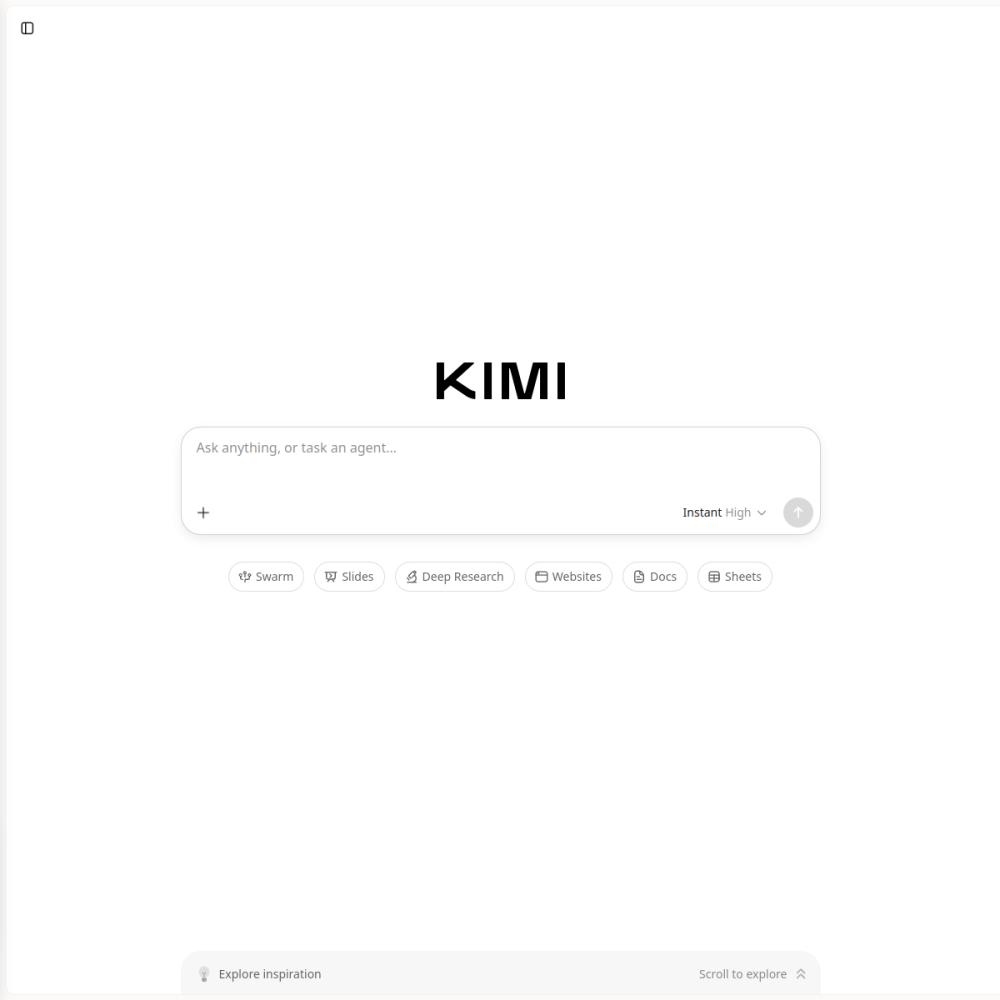
Vendor: Moonshot
Moonshot's deep research and multi-step planning search engine
In-Depth Review
Kimi Explorer (Kimi 探索版) is Moonshot AI's deep research search engine built for complex, multi-step queries that demand thorough investigation rather than quick one-line answers. It plans research steps, gathers information across multiple sources, and synthesizes findings into structured, cited reports.
If you need to compare products, analyze market trends, or compile a research brief without manually opening dozens of tabs, Kimi Explorer automates that workflow. This guide covers what it is, who benefits most, and how to get started.
Kimi Explorer is an AI-powered search engine developed by Moonshot AI, a Chinese artificial intelligence company. Unlike conventional search tools that return ranked links, Kimi Explorer acts as an autonomous research agent. You describe what you need, and it breaks the task into sub-queries, searches the web, reads relevant pages, and assembles a comprehensive answer with source citations.
The tool is part of Moonshot's broader Kimi AI assistant ecosystem. While the standard Kimi chatbot handles general conversation and document analysis, Kimi Explorer is specifically optimized for open-ended research tasks that require multi-step planning and cross-source verification.
Multi-step research planning: Kimi Explorer decomposes complex questions into a sequence of sub-tasks, searches for each independently, and merges the results into a coherent narrative.
Source-cited synthesis: Every claim in the output is backed by a citation linking to the original source, making it easy to verify information and trace where data came from.
Long-context processing: Built on Moonshot's large language model, Kimi Explorer can handle lengthy documents and multi-page reports, summarizing key points without losing critical details.
Kimi Explorer is ideal for researchers, analysts, students, and professionals who need to gather and synthesize information quickly. Market researchers can use it to compile competitive landscapes. Students can generate structured literature reviews. Business analysts can produce trend reports without spending hours on manual web searches.
It is also useful for anyone who finds traditional search engines frustrating when answers require reading multiple pages. If your workflow involves going from search to synthesis repeatedly, Kimi Explorer reduces that overhead.
Market and competitive research: Ask Kimi Explorer to compare features, pricing, and recent developments across multiple companies or products. It will search, read, and summarize findings in a structured format.
Academic and technical research: Use it to gather background on a topic, find key papers or articles, and produce a summary brief. It is particularly helpful for initial scoping before diving deeper into specific sources.
Personal decision-making: Whether evaluating travel destinations, comparing insurance plans, or researching a purchase, Kimi Explorer can compile pros, cons, and expert opinions in one report.
Visit kimi.moonshot.cn to access Kimi Explorer. Sign up with your email or phone number, then select the Explorer mode. Describe your research question in natural language—be specific about what you need and any constraints such as time range or region.
For best results, break very broad questions into focused prompts. Instead of asking 'tell me about AI in healthcare,' try 'compare the top three AI diagnostic tools used in hospitals in 2024, including accuracy rates and adoption status.' The more specific your prompt, the more targeted the research output.
Kimi Explorer is available through Moonshot's Kimi platform. Some features may require a subscription for extended usage or advanced capabilities. Check the official website at kimi.moonshot.cn for current pricing and access tiers.
Standard search engines return a list of links for you to read manually. Kimi Explorer autonomously plans research steps, reads multiple sources, and delivers a synthesized, cited report—combining search and analysis in one workflow.
Kimi Explorer supports queries in multiple languages, including English and Chinese. You can ask questions in either language and receive responses accordingly, making it accessible to international users.
AI search & deep research