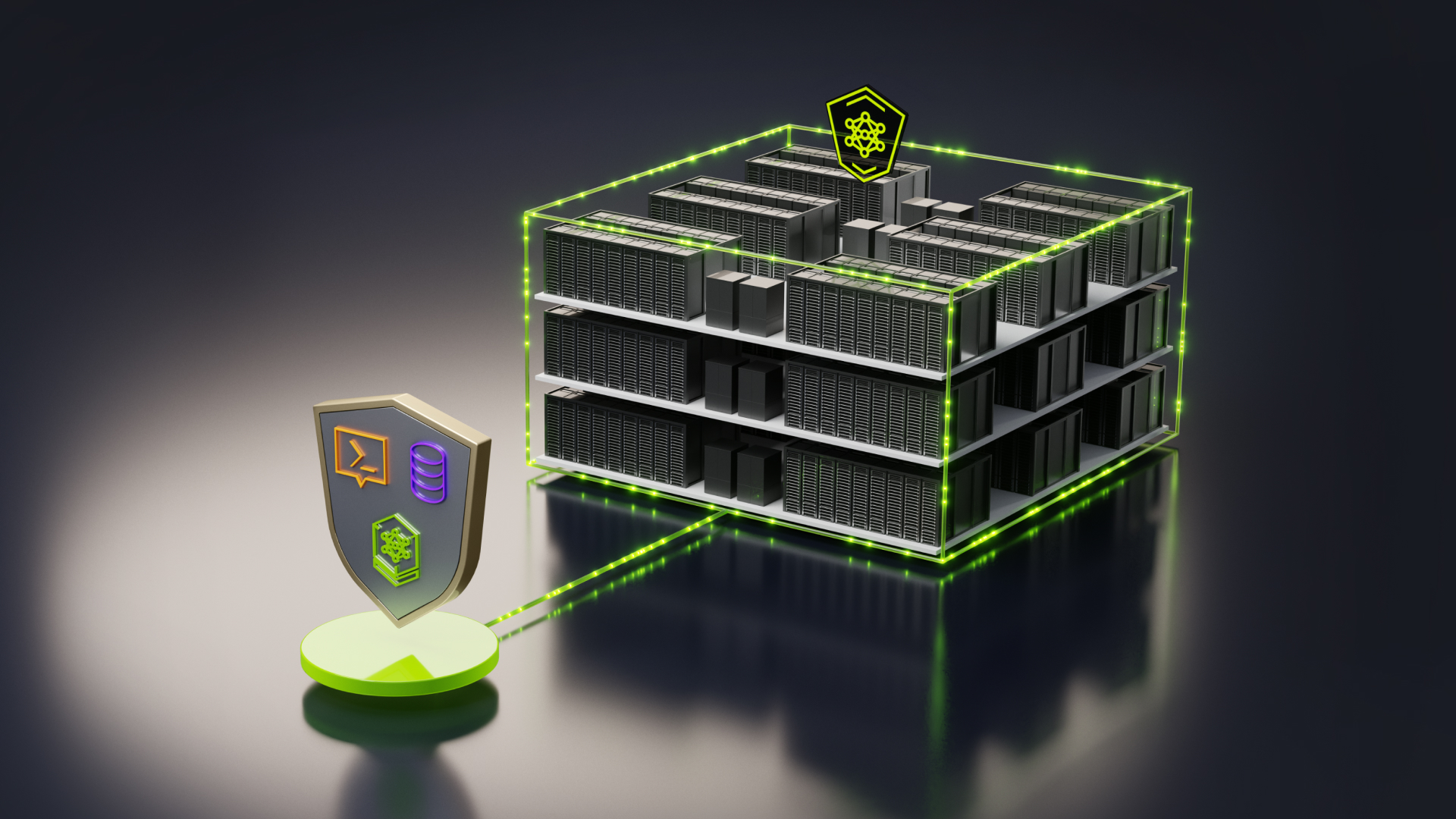
NVIDIA Confidential Computing Expands, Enabling Frontier Model Builders to Securely Scale Across Global Infrastructure
NVIDIA expands Confidential Computing for secure AI scaling and unveils the OpenShell Reference Architecture to help organizations deploy AI agents safely at scale.
Key Takeaways
- Key Highlight:NVIDIA expands Confidential Computing for secure AI scaling and unveils the OpenShell Reference Architecture to help organizations deploy AI agents safely at scale.
- Innovation & Tech:Highlights advancements in NVIDIA, Confidential, Computing, demonstrating rapid progress in model capabilities.
- Industry Impact:Reported via NVIDIA Blog, offering actionable signals for developers and technology leaders.
NVIDIA has expanded its Confidential Computing offerings, allowing frontier AI model developers to run sensitive workloads across global infrastructure with hardware-level data protection. The initiative also introduced the OpenShell Reference Architecture, a new framework designed to give organizations a structured path for deploying AI agents in production environments.
Confidential Computing uses hardware-enforced enclaves to keep data encrypted even while it is being processed, which is critical when training or serving large models on shared or multi-tenant cloud infrastructure. By extending this capability, NVIDIA aims to reduce the security friction that has historically slowed cross-region and cross-provider AI deployments.
The OpenShell Reference Architecture addresses a complementary concern: agent safety. As autonomous AI agents gain access to tools, APIs, and internal systems, the risk of unintended actions grows. NVIDIA's framework provides guardrails and architectural patterns intended to contain agent behavior within defined boundaries, making it easier for enterprises to adopt agentic workflows without compromising operational security.
Together, these moves position NVIDIA to own a broader slice of the AI infrastructure stack — from the silicon that executes models to the security layers that govern how those models and their agents interact with the world. For organizations building frontier-scale systems, the practical benefit is a more integrated path from training to deployment with fewer custom security integrations required.
This page provides an editorial summary based on publicly available information. It is not a republished article. Use the source link below for the original report.
Industry Insights & Analysis
As artificial intelligence rapidly evolves, breakthroughs surrounding NVIDIA, Confidential, Computing, Expands are shifting toward scalable, robust real-world implementations.
Driven by both open-source ecosystems and proprietary model architectures, the integration between compute optimization, data engineering, and agentic workflows is accelerating. This development provides a strategic benchmark for upcoming AI tooling and developer workflows.