One Bad Prompt Took Down a Company’s Salesforce: RSA’s Jim Taylor on Agent ID and Taming the 4,000 Shadow AI Agents Hiding in Your Enterprise
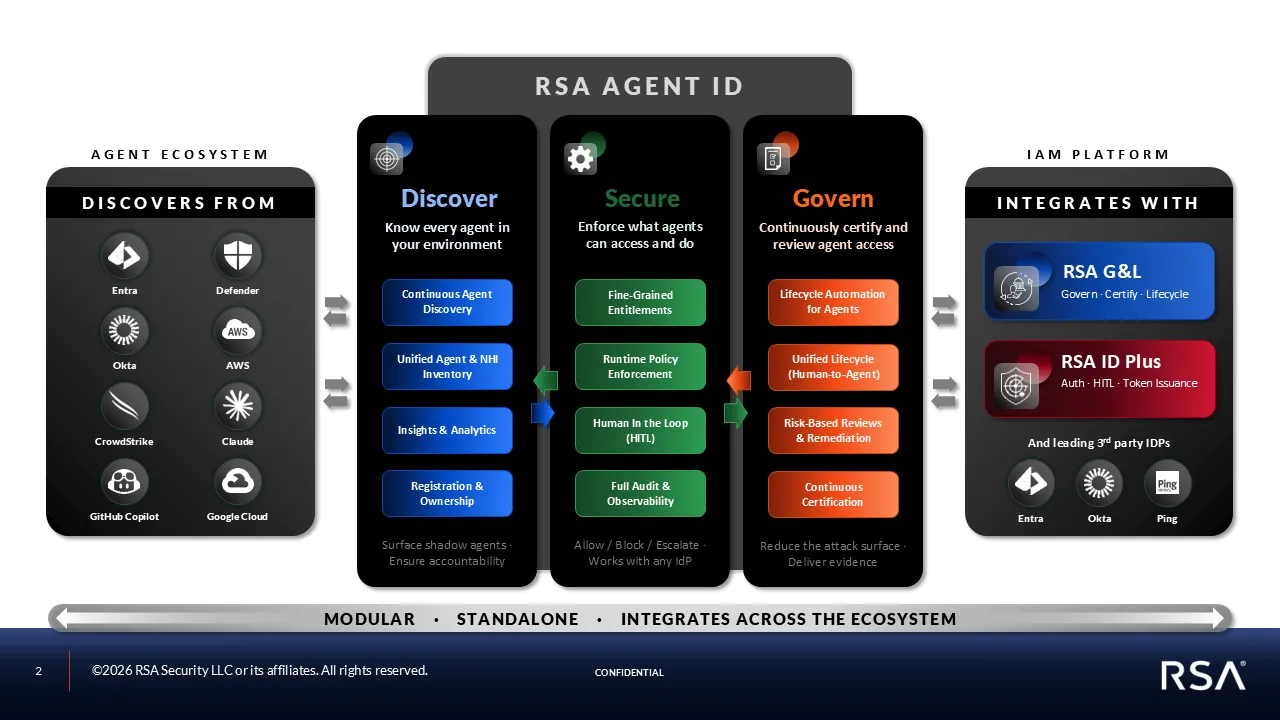
RSA launched Agent ID, an identity security platform for AI agents, at The AI Conference. It targets shadow AI agents in enterprises with three modules: Discover, Secure, and govern.
Key Takeaways
- Key Highlight:RSA launched Agent ID, an identity security platform for AI agents, at The AI Conference. It targets shadow AI agents in enterprises with three modules: Discover, Secure, and govern.
- Innovation & Tech:Highlights advancements in Agent, One, Bad, demonstrating rapid progress in model capabilities.
- Industry Impact:Reported via MarkTechPost, offering actionable signals for developers and technology leaders.
RSA introduced Agent ID at The AI Conference in San Francisco, aiming to address the growing challenge of securing AI agents operating inside enterprises. The platform is designed for sectors like finance, government, healthcare, and critical infrastructure.
The product is built around three modules. Discover identifies both sanctioned and unsanctioned agents, including shadow deployments and MCP servers. Secure functions as an inline gateway to enforce access controls, while a third module focuses on governance.
The launch highlights a real concern: organizations are rapidly deploying AI agents without centralized oversight, creating security blind spots. RSA's framing of "4,000 shadow AI agents" underscores the scale of unmanaged agentic activity that can exist within large enterprises.
Agent ID enters the market as enterprises move from experimentation to operational AI agents. The platform's focus on identity and access management for non-human actors reflects an emerging security category that will likely grow alongside broader agent adoption.
This page provides an editorial summary based on publicly available information. It is not a republished article. Use the source link below for the original report.
Industry Insights & Analysis
As artificial intelligence rapidly evolves, breakthroughs surrounding Agent, One, Bad, Prompt are shifting toward scalable, robust real-world implementations.
Driven by both open-source ecosystems and proprietary model architectures, the integration between compute optimization, data engineering, and agentic workflows is accelerating. This development provides a strategic benchmark for upcoming AI tooling and developer workflows.