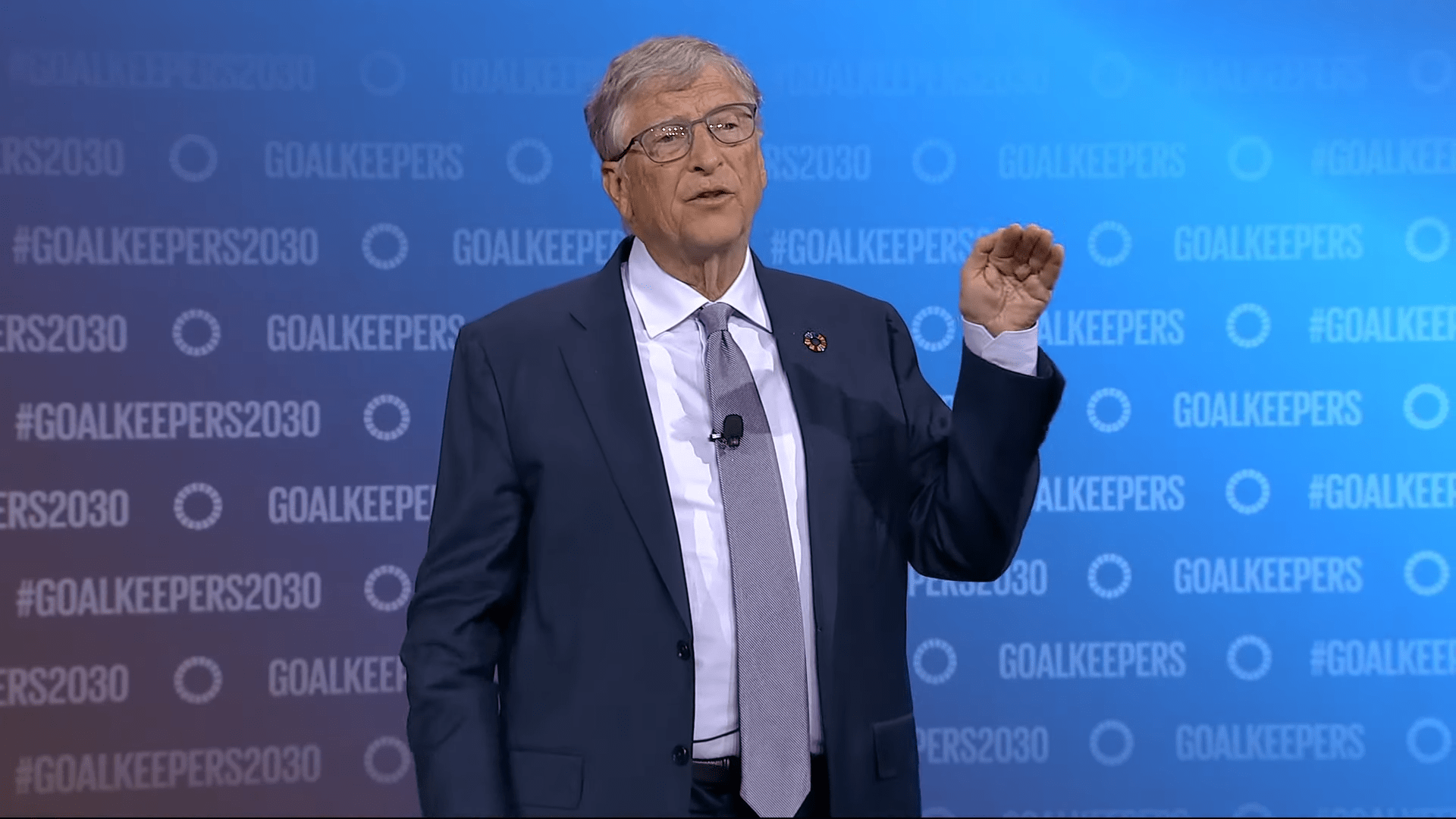
After warning AI is too dangerous, Bill Gates bets a billion on its upside
The Gates Foundation will invest at least $1 billion over two years to expand access to AI tools in health, education, and agriculture. Gates also flagged that over 90% of training data for early language models came from English sources.
Key Takeaways
- Key Highlight:The Gates Foundation will invest at least $1 billion over two years to expand access to AI tools in health, education, and agriculture. Gates also flagged that over 90% of training data for early language models came from English sources.
- Innovation & Tech:Highlights advancements in After, AI, Bill, demonstrating rapid progress in model capabilities.
- Industry Impact:Reported via The Decoder, offering actionable signals for developers and technology leaders.
The Gates Foundation plans to commit at least a billion dollars over the next two years toward making AI tools more accessible in health, education, and agriculture. The investment signals a shift from caution to active deployment of AI in underserved regions.
Bill Gates noted that more than 90 percent of the training data behind early language models came from English sources, highlighting a significant linguistic and cultural gap. This data imbalance raises concerns about how well current models serve non-English-speaking populations.
The foundation's focus areas suggest AI could accelerate progress in diagnostics, personalized learning, and crop management for low-income communities. However, the effectiveness of these tools will depend on whether models can be trained on more diverse, locally relevant data.
The move also reflects a broader industry tension: prominent voices have warned about AI risks while simultaneously backing large-scale adoption. Gates appears to be positioning philanthropy as a bridge between AI capability and global equity.
This page provides an editorial summary based on publicly available information. It is not a republished article. Use the source link below for the original report.
Industry Insights & Analysis
As artificial intelligence rapidly evolves, breakthroughs surrounding After, AI, Bill, Gates are shifting toward scalable, robust real-world implementations.
Driven by both open-source ecosystems and proprietary model architectures, the integration between compute optimization, data engineering, and agentic workflows is accelerating. This development provides a strategic benchmark for upcoming AI tooling and developer workflows.