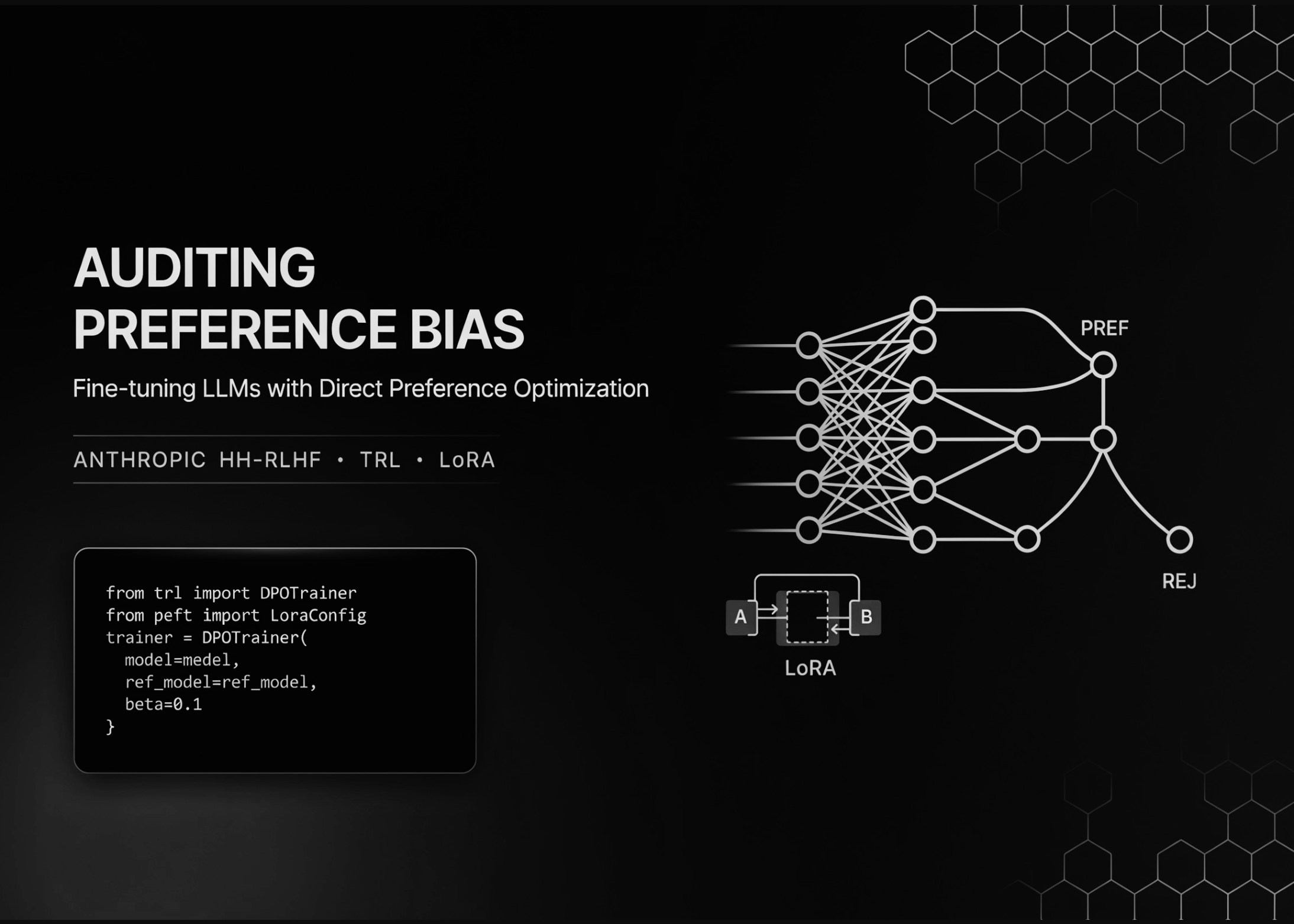
Auditing Preference Biases and Fine-Tuning Language Models with Direct Preference Optimization on Anthropic HH-RLHF Using TRL and LoRA
A new tutorial outlines an end-to-end workflow for fine-tuning language models using Direct Preference Optimization. It utilizes the Anthropic HH-RLHF dataset, TRL, and LoRA to audit biases and implement training pipelines.
The guide details a technical process for refining large language models through Direct Preference Optimization. It focuses on leveraging specific libraries like TRL and LoRA to manage the training pipeline efficiently.
A significant portion of the workflow involves auditing the Anthropic HH-RLHF dataset. This step addresses potential structural and length-based biases within the training data before model optimization begins.
Such methodologies are crucial for developers seeking to align models with human preferences without extensive computational resources. By combining DPO with parameter-efficient techniques like LoRA, teams can iterate on model behavior more rapidly.
This approach reflects the broader industry shift toward accessible fine-tuning strategies. It allows practitioners to customize open-weight models while maintaining control over output quality and safety characteristics.
This page provides an editorial summary based on publicly available information. It is not a republished article. Use the source link below for the original report.